scots statue
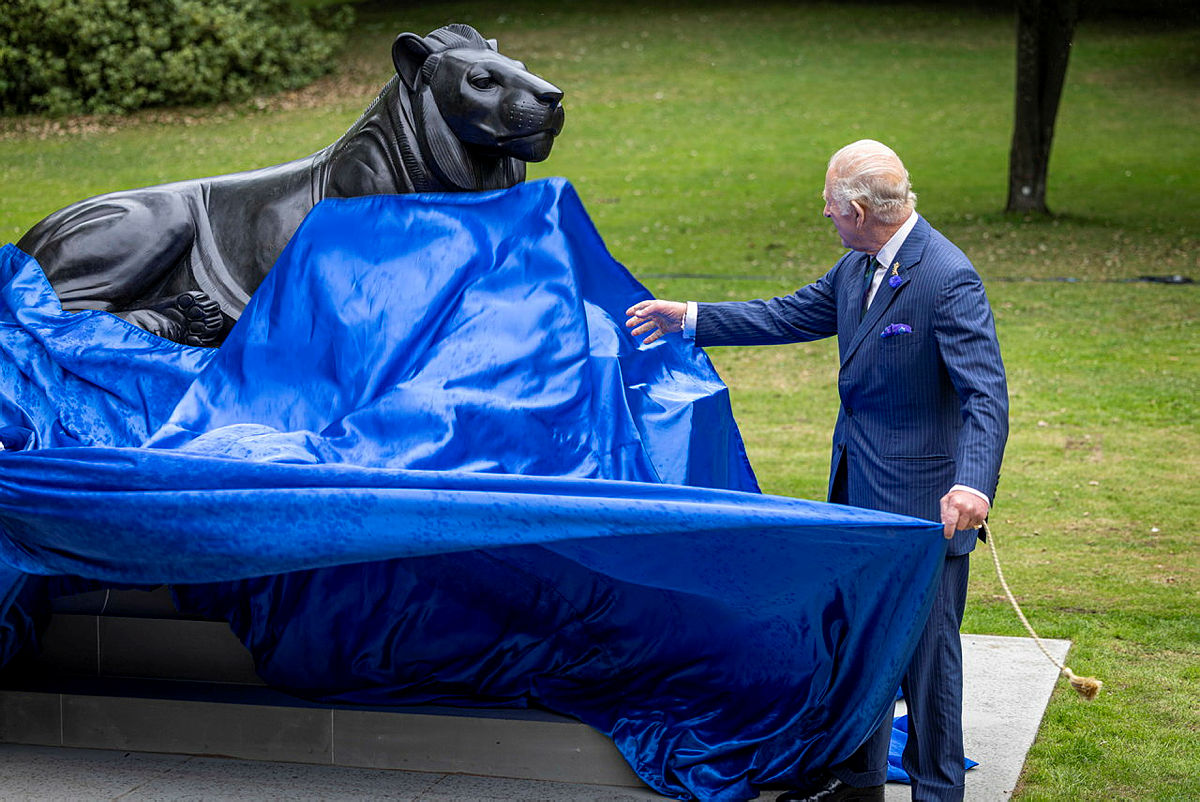
The bronze lion was developed from early clay maquettes and will rest on a stone plinth composed of six sections, each representing one of the six historic Scottish Army Regiments that merged two decades ago to form The Royal Regiment of Scotland. The project has been nearly three years in the making and was officially unveiled by His Majesty The King, Colonel in Chief of The Royal Regiment of Scotland, on 1 July 2026 in West Princes Street Gardens, Edinburgh. This followed a spectacular parade through the heart of Edinburgh, as the Regiment exercised its Freedom of the City. Marching in full ceremonial dress, with drums beating, bayonets fixed, and colours flying, the parade set a memorable scene for this important milestone marking the 20th Anniversary.
PROJECT BRIEF OVERVIEW
To mark the 20th anniversary of The Royal Regiment of Scotland (SCOTS) on 28th March 2026, the Regiment commissioned a statue in the City of Edinburgh. The brief called for a timeless, inclusive memorial, not a war monument, that honours all SCOTS officers and soldiers, past and present, living or deceased. It is intended as a place for reflection and celebration by the Regiment, their families, and friends. The proposed site is West Princes Street Gardens, subject to City of Edinburgh Council approval, with a maximum height of 3 metres including plinth. Materials must convey integrity and permanence, such as stone, bronze, or galvanised stainless steel. The Statue should incorporate the Regiment’s bold and distinctive cap badge and reflect the firm foundations laid by the antecedent regiments, emphasising a forward-looking and inclusive identity.


Interpretation of the Brief
Responding to the brief’s emphasis on inclusivity, permanence, and heritage, the statue concept centres on the Lion from the Regiment’s cap badge, a symbol of strength, courage, and Scottish identity. The design avoids glorification or heroic posturing, instead offering a grounded, empathetic presence that invites personal connection and reflection. The statue is conceived as a gathering place for all members of the SCOTS community, embodying unity across generations.
Kenny Hunter’s design was chosen for its grounded and empathetic presence, avoiding glorification or heroic posturing. The lion invites personal connection and reflection, embodying qualities that resonate with the regiment’s values.
Concept Development
Kenny Hunter explained that animal forms are timeless and do not age like uniforms or hairstyles, making the lion a fitting symbol. He aimed to create a young, life-size male lion that conveys power and force without exaggeration or drama. The sculpture captures a moment of stillness and alertness—the lion is at peace but attentive, with relaxed hindquarters, a raised chin, focused gaze, and twitching shoulders, as if sensing something on the horizon. Hunter sees the lion as a metaphor for the Armed Forces, embodying readiness and vigilance while maintaining calm.
The Lion is depicted reclining rather than rampant, symbolising contemplation of the Regiment’s past and future. This posture conveys strength tempered with wisdom and empathy, aligning with the brief’s call for a timeless and inclusive memorial. The plinth’s structure itself tells the story of the Regiment’s origins: comprising of six stone blocks, representing the six historic infantry regiments that amalgamated to form The Royal Regiment of Scotland, symbolising unity forged from distinct parts.


Design and Materials
Sculpture: Bronze, chosen for its integrity and permanence.
Plinth: Grey sandstone, echoing the six-part structure.
Dimensions: Total height (including plinth) 2.0m; length 3.4m; width 1.94m, well within the 3m height limit.
Composition: Horizontal and grounded, with the Lion’s gaze at eye level to foster relatability and empathy rather than imposing grandeur.
Production and Installation
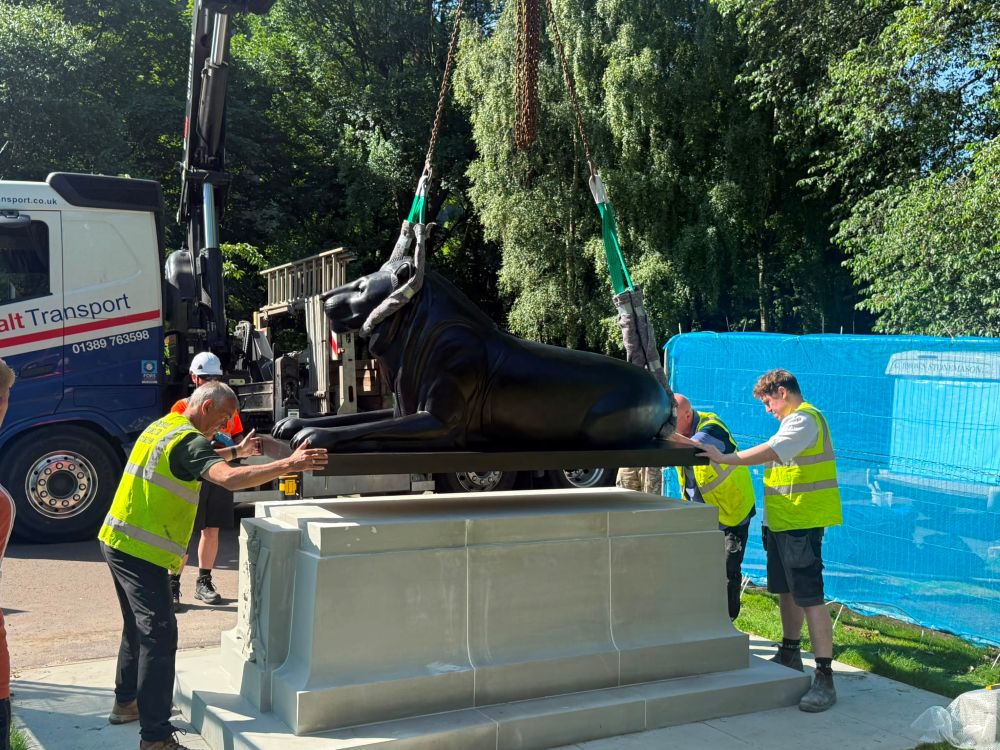
Foundations: Hardcore fill with a 200mm thick reinforced concrete slab, as specified by G Brown Stonemason Ltd.
Plinth Construction: By G Brown Stonemason Ltd.
Bronze Sculpture Installation: By Powderhall Bronze Ltd.
Stone Carving: By Jack Handscombe
Landscaping: A generous paved area will surround the statue, intersecting with existing garden paths to prevent mud and bare patches, and to accommodate future ceremonial activities such as Remembrance Day.

Project Timeline
• Bids submitted by 19th July 2024.
• Design selected by 31st July 2024.
• Statue unveiled on 01 July 2026.
Summary
This statue proposal thoughtfully interprets the project brief by creating a Lion sculpture that is both a powerful symbol of The Royal Regiment of Scotland’s heritage and a welcoming, reflective presence. Through the plinth’s construction and materiality, it narrates the Regiment’s formation from six antecedent regiments, embodying unity and continuity. The overall design balances monumental scale with approachability, fulfilling the brief’s call for a timeless, inclusive, and enduring tribute to all who have served and continue to serve in the SCOTS.
.JPG)

Heritage Assessment
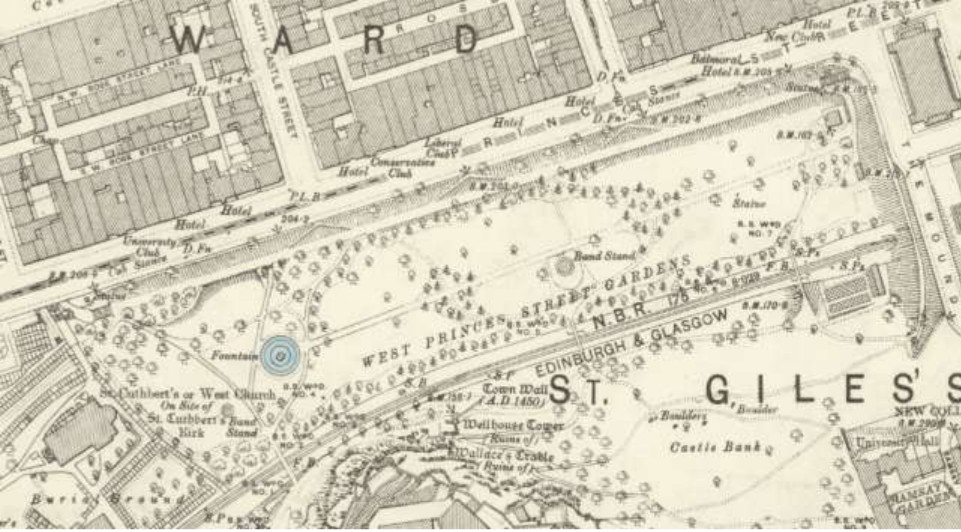
The proposed development near West Princes Street Gardens has undergone a thorough heritage assessment in accordance with NPF4 Policy 7, identifying key heritage assets that may be affected and evaluating their significance.
Princes Street, laid out in the late 18th century as part of James Craig’s New Town Plan, originally featured three-storey residential buildings on its northern side, preserving open views southwards towards Edinburgh Castle and the Old Town. Over time, the street evolved to accommodate commercial properties, hotels, and private clubs, while maintaining these important sightlines.
West Princes Street Gardens were created from the drained Nor Loch around 1820 and have since been a central green space in Edinburgh. The gardens feature terraces, a tree-lined promenade, and a variety of statues and memorials, including the Ross Bandstand (built in the 1930s) and the Category A-listed Ross Fountain. The gardens’ steep topography provides largely self-contained views, primarily towards Castle Rock and the Scott Monument, with limited views of Princes Street due to tree lines.
Heritage Assets and Significance
The site lies within the internationally recognised Old and New Towns of Edinburgh World Heritage Site, inscribed by UNESCO in 1995. This designation highlights the Outstanding Universal Value (OUV) of the area, characterised by the juxtaposition of the medieval Old Town and the planned Georgian New Town. The New Town is noted as the largest and best-preserved example of Georgian town planning in the UK, with intact street layouts and neoclassical architecture. Princes Street Gardens, where the site is located, are a key component of this World Heritage Site, contributing significantly to its character as a designed landscape and public space.
The New Town Conservation Area further protects the site, valued for its formal Georgian architecture, planned urban layout, and the integration of green spaces such as the gardens. The gardens themselves form part of the New Town Gardens, a designated Garden and Designed Landscape, recognised for their historic civic planning, horticultural significance, and contribution to Edinburgh’s townscape.
Several listed statues and monuments within West Princes Street Gardens add to the area’s historic interest. These include the Category A-listed Ross Fountain and Robert Louis Stevenson Memorial, and the Category B-listed Thomas Guthrie Memorial. Collectively, these monuments illustrate the evolution of the gardens as a pleasure ground and public park, enhancing the visual and cultural richness of the space.


Impact on Edinburgh Castle Setting
Although the site is located approximately 85 metres from Edinburgh Castle, a Scheduled Monument, the assessment concludes that the proposed development will not harm the castle’s setting or its significance. The gardens’ topography and existing features ensure that the castle’s iconic views and historic context remain protected.
Conclusion
This heritage assessment that was carried out underscores the exceptional cultural, architectural, and historic value of West Princes Street Gardens and its surroundings. The gardens are integral to Edinburgh’s unique townscape, providing a verdant public space enriched by historic monuments and carefully preserved views. The proposed development has been carefully scoped to respect and protect these heritage assets, ensuring the continued appreciation of this internationally significant area.

Kenny HUnter - Sculptor
Born in Edinburgh in 1962, Kenny Hunter studied sculpture at Glasgow School of Art between 1983 and 1987, he then went on to study sculpture at the British School in Athens in 1990.
Since then he has exhibited extensively in Britain and abroad including solo exhibitions at Arnolfini, Bristol, Scottish National Portrait Gallery, Edinburgh, Aberdeen Art Gallery, Yorkshire Sculpture Park, CCA, and Tramway both in Glasgow. Kenny has also created a number of high profile, public commissioned works in including; Citizen Firefighter, 2001, outside Glasgow’s Central Station and Youth with Split Apple, 2005, at Kings College, Aberdeen.
In London he has created three major public works iGoat 2010 in Spitalfields, Blackbird (the persistence of vision) for Leicester Square, 2016 and The Southwark Memorial to War and Reconciliation, 2018. In Edinburgh in 2022 he was commissioned to create a covid memorial at the Royal College of Surgeons, entitled Your Next Breath, for which he received the Marsh Award for Excellence in Public Sculpture in 2023.
In 2025 Kenny left his teaching post at Edinburgh College of Art where he was Programme Director of Sculpture from 2014 to 2017, to work full time on his Art practice.
Our Kind Donors
The SCOTS Statue stands as a powerful symbol of our heritage and pride, a tribute that would not have been possible without the extraordinary generosity and unwavering support of our donors. Their contributions have been instrumental in bringing this vision to life, reflecting a shared commitment to honouring our history and those who have served. We are deeply grateful to every individual and organisation whose kindness and dedication made this remarkable achievement a reality:
Stuart Shilson
Alastair King
James King
Oliver Reedman
Tim Allan
Iain Anderson
Colin Orr
Lt Col Paddy Nicoll VR
hutton stone
Hutton Stone are quarriers, stone merchants and banker masons. Our highly skilled and friendly team of 44 staff are dedicated to supplying the finest quality, natural and sustainable UK sandstone. With Production Facilities in the Scottish Borders and North Northumberland and supply throughout Scotland and across the UK.
Founded in 1994 by Managing Director Marcus Paine, a 5th Generation Quarrier and Past President of The Stone Federation GB, the company operates three exclusive sandstone quarries with state-of-the-art sawing and production equipment and also stocks a further 20 other types of British stone to serve their wide client base. Hutton Stone specialises in New Build and Restoration supply projects with highly skilled Banker Masons, Carvers, and mass produced walling production too. In 2024, as part of a focus on a sustainable future for Natural Stone it launched Darney Heritage Natural Stone Bricks, a new sustainable construction product with a fraction of the carbon footprint of clay-fired bricks.
Marcus has spent the majority of his time over the past few years promoting a new and highly sustainable vision of his historic trade to a new generation of design professionals. He recently became President of the European Stone Federation “EuroRoc” and continues to promote the idea of both a New Stone Age and a reconnection with materials, makers and creators in a modern Arts and Crafts Movement.
Stone are quarriers, stone merchants and banker masons. Our highly skilled and friendly team of 44 staff are dedicated to supplying the finest quality, natural and sustainable UK sandstone. With Production Facilities in the Scottish Borders and North Northumberland and supply throughout Scotland and across the UK.
g brown stonemason ltd
Graeme Brown, Director of G Brown Stonemason Ltd, began his career as an apprentice stonemason in 1985. During his apprenticeship, he was awarded the Top Apprentice Award at college, recognising his dedication and skill in the trade.
Building on this strong foundation, Graeme went on to establish his own business and, in 2000, founded G Brown Stonemason Ltd. Since then, the company has earned industry recognition and awards for its high standards of craftsmanship and commitment to traditional stonemasonry.
The core focus of the business has always been the conservation, restoration and repair of historic buildings and structures, using traditional materials and techniques. Over the years, G Brown Stonemason Ltd has successfully completed work on a wide range of significant heritage projects, including Invergarry Castle, Cessford Castle, Stoneypath Tower (Nigel Tranter Award, 2007), and the major five-year restoration and renovation of Penicuik House. The company has also carried out extensive works on General Wade and Major Caulfeild's military roads and bridges, historic harbours, as well as the lime harling of numerous historic buildings and stately homes throughout Scotland.
In addition, the company has undertaken the restoration and conservation of many war memorials, most recently the Prestonpans War Memorial, completed just over two years ago.
G Brown Stonemason Ltd regularly works alongside leading conservation architects and engineers to ensure the highest standards are maintained on every project. Training and skills development have always been central to the company's values, with more than ten apprentices successfully completing their training through the business. The company has also been involved in delivering on-site training programmes in Ireland and Estonia, helping to promote and preserve traditional stonemasonry skills internationally.
G Brown Stonemason Ltd was honoured to be approached by Kenny and given the opportunity to deliver this important monument for the Army. It has been a privilege to contribute to such a significant project, and we hope that the finished monument reflects the respect and dedication it deserves.
Powderhall bronze
Powderhall Bronze Ltd was established in 1989 by directors Brian Caster and Kerry Hammond and is one of the UK's premier fine art foundries. The foundry offers a variety of services including bronze casting, metal fabricating, restoration and conservation, and enlarging. Our client base includes artists, architects, designers, local authorities, and corporate bodies and our projects range in scope from local to international and from artists' maquettes to monumental civic artworks.
The foundry uses a variety of lost wax and sandcasting techniques to transform the artist's original artwork into bronze. Powderhall Bronze has produced numerous major public commissions over the years. Notable works include, 'Really Good' by David Shrigley, Fourth Plinth, Trafalgar Square, London. 'Your Next Breath' by Kenny Hunte, Surgeons Hall, Edinburgh. 'Model T Ford car'. Fort William, Scotland. 'Southwark War Memorial' by Kenny Hunter, Walworth Square, London.
JACK HANDSCOMBE
Jack Handscombe (b. 1994) came to the Edinburgh College of Art to study Fine Art and Art History, specialising in Sculpture in the department then headed by Kenny Hunter. During his time at the College, he developed a particular interest in the architecture and sculpture of the city and the processes that lay behind it.
This interest in the craft of sculpture led Jack to work on the foundry floor at Powderhall Bronze and to attend the Prince's Foundation course in Traditional Building Crafts at Dumfries House, where he first encountered stone carving. Having found an affinity with the material, he went on to study figurative marble carving in South Tyrol, Italy, for two years, learning the tools and techniques of the trade.
Returning to Scotland in 2021, Jack exhibited sculpture at the Royal Over-Seas League, the Scottish Arts Club and, at Kenny Hunter's invitation, the Royal Scottish Academy.
His growing interest in the relationship between architecture and sculpture led him to Hutton Stone in the Scottish borders in 2023, undertaking architectural restoration work as well as developing an ambitious programme of architecturally integrated sculpture at Longniddry Village in East Lothian.
Kenny Hunter invited Jack to collaborate on the design and carving of the stone pedestal for the Scots Statue. Developed from Kenny's original concept, the pedestal is formed from six interlocking stones representing the antecedent regiments, bound together by two keystones. The west keystone bears the Regiment's name and formation date, while the east is carved with the cap badge of a lion Rampant and Saltire. The design draws on Edinburgh's tradition of military memorial sculpture, taking inspiration from the Scottish American Memorial, the Stone of Remembrance at the City Chambers, and the pedestal on which the lion guarding National War Memorial on the castle above rests.